
Kill Bill is, above all else, a story about unfinished business.
The Bride has a list. Quentin Tarantino had a sprawling movie that was divided into two. A lost chapter sat unused for more than two decades. Even the Bride’s real name remained unfinished business, repeatedly beeped from the soundtrack until Beatrix Kiddo, codename Black Mamba, was finally revealed.
Now, with Kill Bill: The Whole Bloody Affair finally released in theaters and available to stream, some of that unfinished business has at last been settled.
I simply and unapologetically love every little and big thing about Kill Bill.
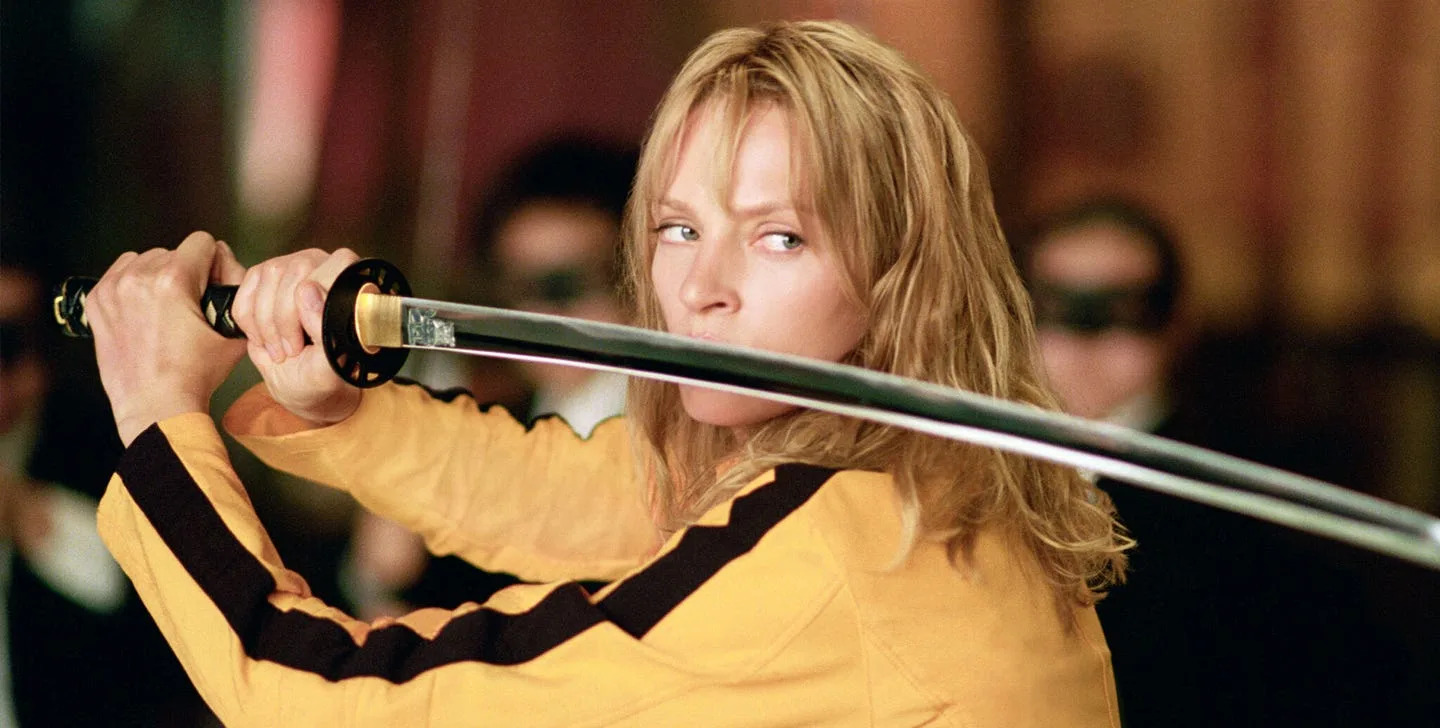
The ridiculously awesome fight choreography. The unhinged revenge plot. The chapter titles, Shaw Brothers influences, spaghetti-western standoffs, split screens, silhouettes, fountains of blood, and sudden detours into anime. The soundtrack that somehow makes Nancy Sinatra, Japanese garage rock, Ennio Morricone, and the Ironside siren feel as though they were always meant to coexist.
Uma Thurman is unforgettable as the Bride. Even before we know her name, she has already become something larger than a normal movie character. Tarantino literally beeps out “Beatrix Kiddo” during the first movie, turning her identity into another mystery inside a story already overflowing with aliases, secret histories, and unfinished business.
Then there is the rest of the cast. Lucy Liu as O-Ren Ishii. David Carradine as Bill. Michael Madsen as Budd. Daryl Hannah as Elle Driver. Vivica A. Fox as Vernita Green. Gordon Liu pulling double duty across the movies, most memorably as the gloriously cruel Pai Mei. Sonny Chiba as Hattori Hanzō. Chiaki Kuriyama as Gogo Yubari. So many characters who could have carried their own movie, each arriving with just enough history to imply that an entire world existed before the camera found them.
That world is one of my favorite parts. Kill Bill helped Tarantino’s larger mythology continue taking shape into his own strange and wonderful multiverse: recurring actors, shared brands, familiar names, invented histories, movies within movies, and characters who feel as if they might have crossed paths somewhere just outside the frame. It rewards repeat viewing because there is always another connection, homage, or tiny piece of lore waiting to be noticed.
RZA gives it a pulse
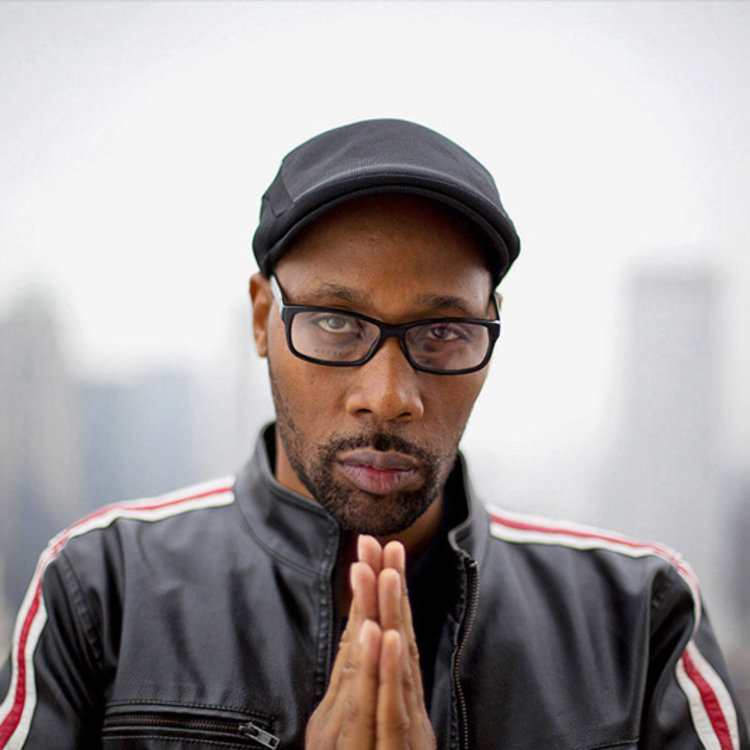
RZA did more than contribute music. He organized, produced, and orchestrated much of the first movie’s soundtrack, connecting Tarantino’s kung-fu obsession with hip-hop’s own traditions of sampling, remixing, and rebuilding culture from the coolest pieces you can find.
The soundtrack is not background decoration. It is part of the choreography. Music announces characters, stretches tension, releases it, and makes images stick in your memory. Robert Rodriguez joined the musical work on Volume 2, building orchestration over foundations RZA had already created. It is another collaboration inside a movie assembled from collaborations, influences, and obsessions.
And then The 5.6.7.8’s appear at the House of Blue Leaves.
They were not assembled for the movie. They were already an all-female Japanese garage-rock band with years of history behind them when Tarantino heard their music playing in a secondhand clothing store in Tokyo. He wanted the record, the store would not sell it, and the story eventually led to the band appearing in the film.
That is such a perfectly Tarantino chain of events: hear an obscure song while shopping, become obsessed with it, track down the musicians, and build them into one of the most memorable sequences in your movie.
“Woo Hoo” plays while the Bride prepares to dismantle the Crazy 88, and somehow the whole thing works.
Of course it works.
The other Black Mamba
The Black Mamba name also offers an excuse for a quick Kobe Bryant detour. Kobe directly attributed the inspiration for his alter ego to Kill Bill, borrowing the Bride’s codename and connecting it to the snake’s speed, precision, and temperament.
I am also an unapologetic Kobe Bryant fanboy, with more than a few of his rookie cards tucked into my somewhat eclectic card collection. A copy of The Mamba Mentality: How I Play sits on my youngest son’s bookshelf, given partly as a basketball book and partly as an education in what it takes to become great: preparation, repetition, attention to detail, and a willingness to consistently do the work that others will not.
So yes, a video of Kobe appearing with members of the Jackass crew and dunking over a swimming pool filled with snakes absolutely belongs here.
Is it essential to understanding Kill Bill? Not remotely. Is it precisely the kind of thing this rabbit hole was built for? Absolutely.
Unfinished business finds Fortnite
More than two decades later, the mythology somehow extended into Fortnite. The Bride became a playable character, Gogo Yubari received an outfit tied to the theatrical release, and Tarantino revived the long-discussed “Yuki’s Revenge” material as a Fortnite experience built in Unreal Engine and starring Uma Thurman.

That sentence would have sounded completely nonsensical in 2003, but it also feels oddly appropriate. Kill Bill was always part movie, part comic book, part video game, part kung-fu marathon, and part mixtape made by the most enthusiastic person at the video store.
Apparently even Kill Bill’s discarded ideas refuse to stay dead.
The whole bloody thing
Now Kill Bill: The Whole Bloody Affair has finally received its proper theatrical release and made its way to streaming in 2026. The unified version runs four hours and forty-one minutes, includes a fifteen-minute intermission, removes the artificial break between the original volumes, and restores additional material, including an expanded anime sequence. It is closer to the enormous, excessive, singular movie Tarantino originally intended.
Nothing about it is restrained or subtle. It is violent, funny, theatrical, stylish, ridiculous, sentimental, and completely committed to its own world. It borrows from decades of movies without feeling like a museum exhibit. It takes revenge-movie simplicity and builds an entire mythology around it.
A four-hour-and-forty-one-minute revenge epic, complete with an intermission, finally released as one whole bloody affair?
Chef’s kiss. 💋
Down the rabbit hole
- Stream Kill Bill: The Whole Bloody Affair on Peacock — the unified cut began streaming on May 22, 2026.
- The Whole Bloody Affair 4K Collector’s Edition — because four hours and forty-one minutes of unfinished business apparently deserves shelf space too.
- The secret weapon of the soundtrack: The 5.6.7.8’s — including the story of Tarantino hearing the band in a Tokyo secondhand clothing store.
- RZA on working with Tarantino and learning filmmaking — music, kung-fu movies, and the student eventually becoming a director.
- “Yuki’s Revenge” premieres in Fortnite — Epic’s official account of the lost chapter finally being made.
- Why Kobe Bryant chose “Black Mamba” after watching Kill Bill — the direct connection between Beatrix Kiddo’s codename and Kobe’s alter ego.
- The Mamba Mentality: How I Play — part basketball book, part study in preparation, discipline, and doing the things others will not do in pursuit of greatness.
- Official 4K collector’s-edition trailer