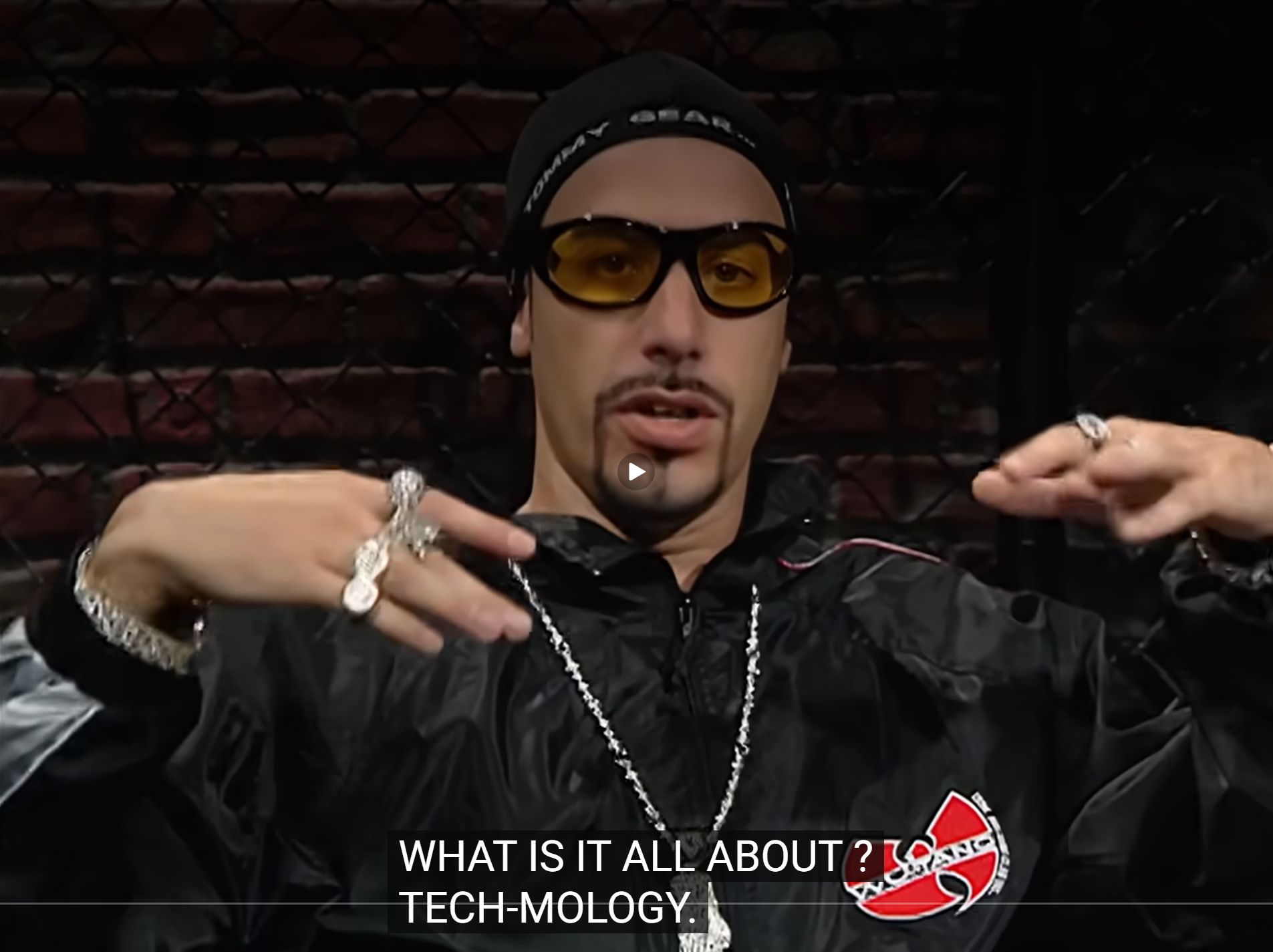

It all comes out in the wash.
My first manager at Microsoft once gave me a piece of career advice that was shorter than most leadership frameworks:
Do right.
That was it, and he lived it. He had my back, trusted me, and invested in me as a person rather than simply as a resource assigned to his team. Sometimes that kind of leadership does not convert neatly into a metric about the manager’s own performance, but it matters. I cannot know what my career at Microsoft would have looked like without that start, but he helped establish my definition of good leadership before I had enough experience to confuse leadership with organizational theater.
In my vocabulary, he was an OG. A true baller of a manager because he protected his people, made the team better, and used a standard more durable than personal advantage:
Do right first.
That advice has always felt at home beside another leadership story I like: Georgia Southern football under Erk Russell.
Georgia Southern hired Russell in 1981 to restart a football program that had been dormant for decades. The first team he put on the field in 1982 was made entirely of walk-ons. Three years later, Georgia Southern won the 1985 Division I-AA national championship, repeated in 1986, and won another in 1989. Russell finished his eight seasons as head coach 83-22-1, but the record is only part of why his influence still hangs over the program.
Russell was building a culture at the same time he was building a team. Georgia Southern describes that culture as blue-collar work, doing the most with the least, and a legacy of integrity: doing the right thing regardless of the circumstance. GATA came from Russell as a call to action once the plan is in place and it is time to do the job correctly. Beautiful Eagle Creek started as a drainage ditch. The yellow school buses started because the resurrected program had almost no money. Necessity became identity.
I am not trying to turn football into a tidy theory of leadership. Sports do not automatically make good leaders, and winning does not prove character. I just like the posture: do the work, make the team better, use what you have, tell yourself the truth about the situation, and do right.
A quarterback has to see more than his own assignment. He has to understand how the pieces fit together, distribute the ball, make decisions before every variable is settled, and help the people around him succeed. That also describes the kind of manager I encountered when I arrived at Microsoft. He gave me protection, context, confidence, and enough room to start seeing the field for myself.
The plays changed from customer support to cloud, learning, operations, leadership, and now AI. The first filter still works:
Do right.
The Georgia Southern connection has become more meaningful with time. This year, two of my four children will be Georgia Southern Eagles, with a real possibility that eventually it could be three of four. A program whose culture was shaped by Erk Russell decades ago is now part of my family’s story too.
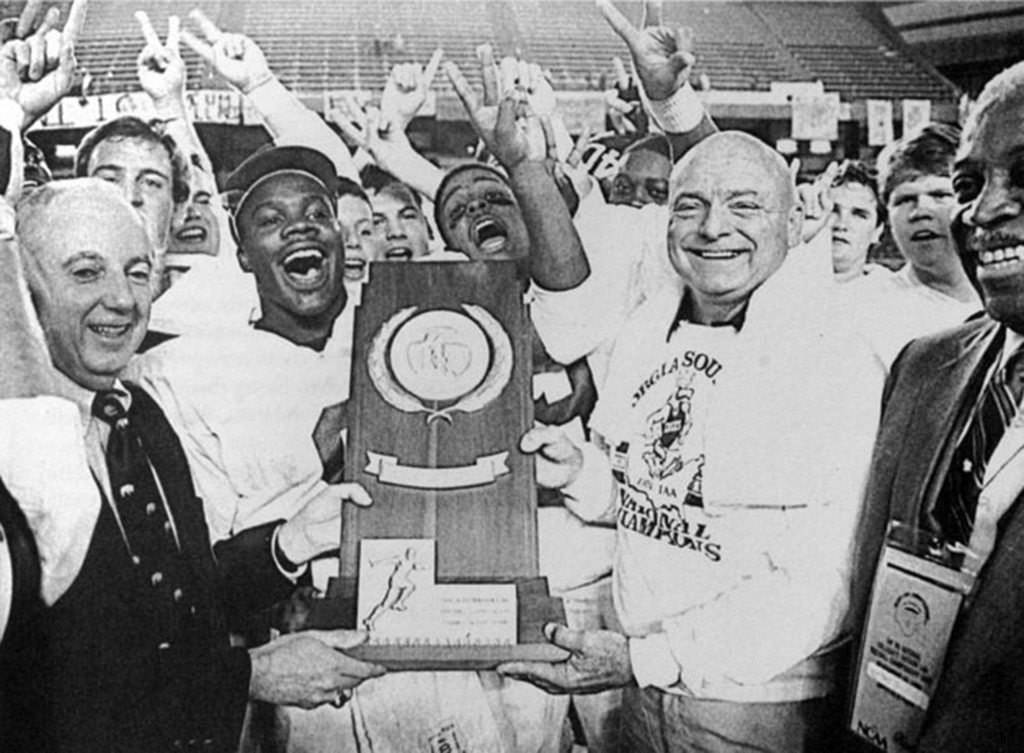
Freedom, Freedom II, and GUS the Eagle are part of what makes Georgia Southern feel less like a logo and more like a living tradition.



I have been thinking about that advice lately because this is an anxious time to work. We are post-COVID, mid-restructuring, and well into the latest wave of AI. Roles are changing, organizations are flattening, and work that once took a week can sometimes be produced before lunch. Everyone is trying to understand what remains valuable and how to make sure that value is visible.
That creates an obvious temptation. Call it visibility management, perceived impact, or “token maxxing,” a phrase I recently and regrettably heard used by someone far too senior for it to feel like a joke. The posture is the same: generate more artifacts, claim more surface area, attach yourself to more initiatives, and make sure the machine registers your motion.
Another dashboard, workstream, pillar, status report, visualization, or carefully formatted HTML report can make everything look impressively green. Or perhaps Al Green: smooth, soulful, and extremely well produced.
The problem is that production is not value, and motion is not progress. Measurements are useful, but they are still proxies for something else.
This is not a new lesson for me
I recognize the trap because I have fallen into versions of it myself. At the end of my first year at Microsoft, I wrote that earlier in the year I would have tried to contribute to everything. By then, I had started to understand that effectiveness was not measured by participation. Sometimes the most useful thing I could do was connect the right people and get out of their way.
More than a decade later, near burnout, I recognized a related mistake. I had treated availability as commitment and responsiveness as impact. Being reachable at every hour created plenty of evidence that I was working, but it did not prove that I was doing the right work or that the work was sustainable.
The error was the same in both cases: confusing an observable proxy with the thing it was supposed to represent. Participation can be evidence of contribution. Responsiveness can be evidence of commitment. Output can be evidence of value. None of them proves the underlying thing by itself.
The proxy becomes dangerous when it is easier to maximize than the real outcome, especially when the people doing the measuring begin to forget there was ever a difference.
The self-licking ice cream cone
There is an old phrase for a system whose main purpose becomes sustaining itself: a self-licking ice cream cone.
You can spot one when the work feeds the reporting, the reporting justifies the work, and both create demand for another reporting cycle. The initiative is successful because it produced the artifacts it promised. The dashboard is green because it measures completion of its own inputs. Everyone can point to activity, while it gets harder to explain what became meaningfully better.
These systems can survive for a surprisingly long time because the artifacts look convincing. Eventually, though, the people downstream experience the difference between the representation of the work and the work itself. The customer knows whether the problem was solved. The operator knows whether the process works. The executive knows whether the briefing answered the actual question. The teammate knows whether working with you improved the outcome or simply made the meeting longer.
There are a lot of ways to say the same thing: real recognizes real, game recognizes game, ball don’t lie, or the one I grew up hearing, it all comes out in the wash. Reality has a way of auditing the story.
Artifacts are not operating systems
I am not arguing against reports, dashboards, KPIs, OKRs, or workstreams. I use and build all of those things. They can create inventory, focus attention, expose dependencies, and help people coordinate. The problem comes when the artifact starts standing in for the operating system.
A collection of workstreams is not an operating model unless the pieces fit together. A list of owners is not accountability unless somebody owns the whole answer. A sprint full of completed tasks does not prove the underlying system improved. A weekly status email is not executive readiness if the reader still has to reconstruct reality from several fragments.
I have seen this recently in executive preparation. We had a central tracker, recurring review, identified owners, briefing materials, milestones, and weekly calls for updates. Each contributor owned a legitimate piece: operational context, customer history, technical repair, briefing construction. Yet the executive still had to ask the basic question: who owns the whole answer?
That question exposed the gap. We had owners for the fragments, but the system still expected the consumer to perform the synthesis.
The fix was not another artifact. It was clearer accountability for the coherent answer: what is happening, why it matters, what remains open, who is doing what, and what decision or help is needed next.
The same thing happens at the portfolio level. Organizing work into pillars and workstreams creates useful inventory and momentum, but it does not automatically create an operating model. You still need governance, dependency mapping, decision rights, and a way for bottom-up learning to influence top-down priorities. Without that connective tissue, every pillar can look successful inside its own boundary while the organization accumulates seams between them.
A report can support the system. It cannot substitute for it.
A beautifully organized pile is still a pile
I have been experimenting with AI to organize my own work across separate projects for operating-model design, tooling and data, engagement models, knowledge strategy, evidence and impact, people leadership, stakeholder context, career development, and personal writing.
The separation helps. Technical machinery is not the same thing as the operating model that consumes it. A working idea is not authoritative guidance. A person’s self-report is not independently verified evidence. An internal lesson is not automatically a public story. Keeping those boundaries visible reduces the chance that a confident summary quietly turns one category into another.
But I can also create a beautifully labeled museum of my own context. Twenty projects, perfect templates, dated summaries, and an elegant taxonomy would still be a self-licking ice cream cone if the system did not help me make better decisions, reduce repeated work, transfer context, develop people, or improve an outcome.
Structure is valuable when it reduces entropy. If every connection, reconciliation, and translation still routes through me, I have documented the bottleneck without removing it.
Context is part of the truth
Another failure mode in anxious organizations is presenting a technically correct fragment while leaving out the context that changes its meaning. A status can be green inside one team’s boundary while the broader outcome is red. A metric can improve while the customer experience gets worse. A person can complete every assigned task while everyone around them absorbs the integration cost.
That is why context matters: what happened, what outcome were we trying to create, what did we know at the time, who owns the next decision, what is documented fact, what is interpretation, and what still needs validation?
I have started using a simple chain to discipline impact claims:
activity → output → adoption → outcome → impact
We held the workshop. That is activity. We produced the model, report, dashboard, or tool. That is output. People began using it. That is adoption. Their behavior, decisions, speed, quality, or reliability changed. That is an outcome. The changed outcome created durable value for customers, employees, or the business. That is impact.
Most overselling happens by jumping across one or more arrows. We built it, therefore it was adopted. People tried it, therefore it improved the outcome. The metric moved, therefore our work caused it. Maybe, but each arrow carries an evidentiary burden.
Honest impact reporting preserves the chain. It names contributors and dependencies and distinguishes led, created, enabled, contributed to, resulted in, and caused because those words make different claims about reality.
AI makes those distinctions more important, not less. It can turn scattered fragments into a confident narrative faster than any of us could do manually. That is useful when the inputs are trustworthy and the destination is clear. When they are not, AI can manufacture polished coherence around unresolved ambiguity.
That may be the most sophisticated form of token maxxing: producing so smoothly that nobody notices we still have not decided what is true, who owns the outcome, or why the thing exists.
What survives the reporting period
In a world of AI, restructuring, shifting roles, and uncertain measures of contribution, I keep coming back to four things:
- Create real value. Make something better for a customer, teammate, operator, or organization. If the artifact disappears tomorrow, something useful should remain.
- Be worth collaborating with. Bring context, reduce ambiguity, share credit, and own the answer when the pieces cross boundaries.
- Do the right thing. Tell the truth when the status is not green. Preserve the difference between evidence and inference. Resist claiming more than the work supports.
- Think beyond the measurement window. A KPI, OKR, sprint, performance cycle, or success measure is a partial view of reality. Use it without shrinking the work to fit inside it.
This is not a case against visibility. Good work that nobody understands can be difficult to sustain, fund, repeat, or recognize. Communicating impact is part of the job. It is also not a case for becoming quietly indispensable. I have written before that heroes do not scale. During uncertain times, being the only person who can reconcile the trackers, explain the exceptions, or connect the right people can feel like job security, but “we cannot do this without you” is not always a compliment. Sometimes it is a diagnosis.
The more durable contribution is to build the shared vocabulary, ownership model, trustworthy information, repeatable workflow, and transfer of judgment that allows the work to keep moving when the hero is not in the room.
There is a difference between making value legible and manufacturing the appearance of value. One begins with the work and helps other people see it. The other begins with the desired perception and works backward toward whatever evidence will sustain it.
That distinction may blur for a while, but it does not stay blurred forever. Eventually somebody asks the question that matters: Did this make anything meaningfully better?
It all comes out in the wash. Ball don’t lie. Do right.
Down the rabbit hole
- Goodhart’s Law and its variants — a deeper treatment of what happens when a proxy measure becomes an optimization target. The warning is not “never measure.” It is that optimizing the measurement can break its relationship to the outcome we care about.
- Donald T. Campbell, “Assessing the Impact of Planned Social Change” — the source of the closely related observation now called Campbell’s Law: the more a quantitative indicator is used for consequential decisions, the more pressure there is to corrupt the indicator and distort the process it was intended to monitor.
- NASA’s oral history with S. Pete Worden — Worden discusses his “self-licking ice cream cone” criticism of institutional activity that becomes oriented toward sustaining its own support. The metaphor is ridiculous enough to remain useful.