One year ago today, on January 27, 2010, I walked through the doors of Microsoft for the first time as an employee—a “blue badge” FTE.
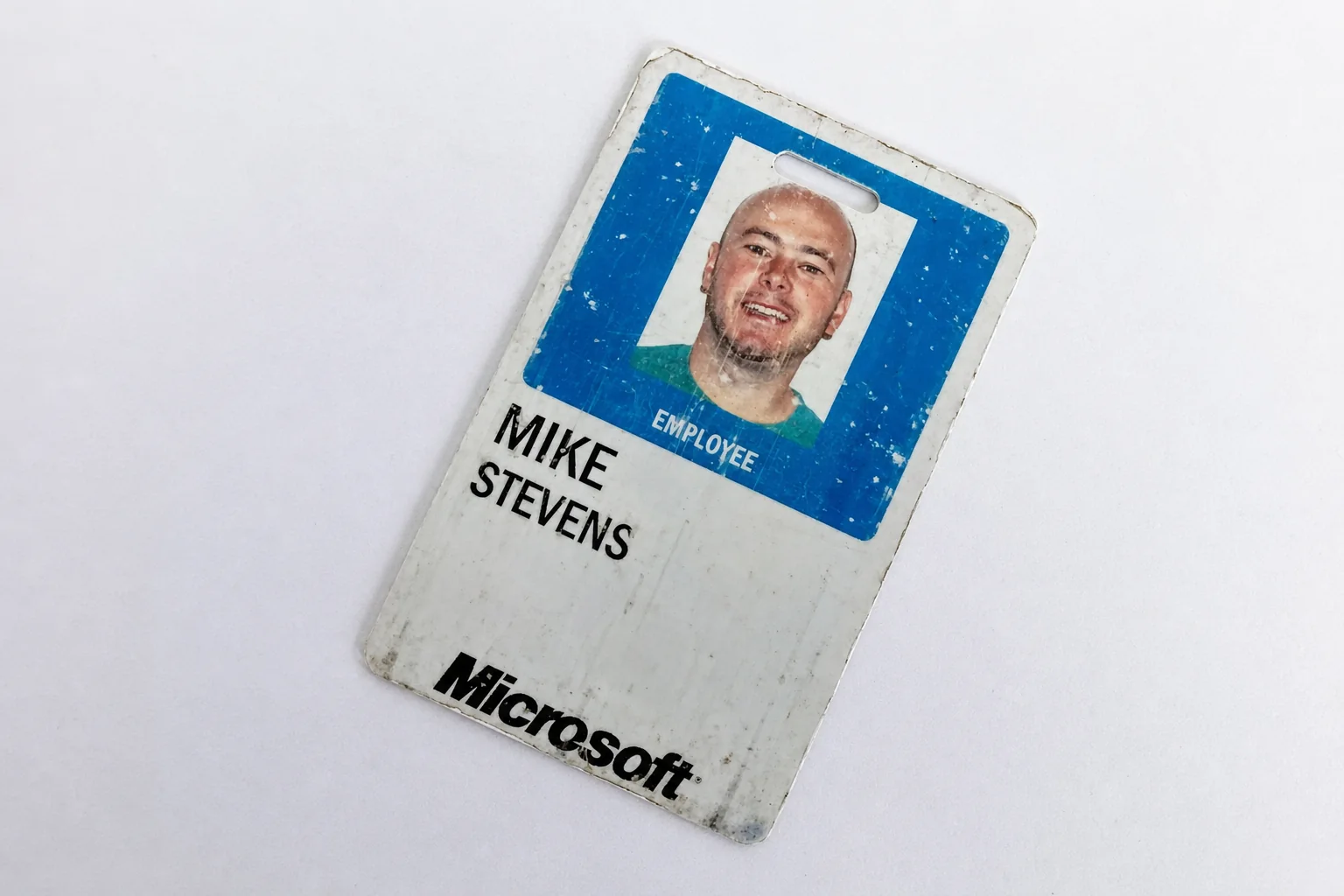
For my adult life—and much of my adolescence—Microsoft had been the company I hoped I might someday work for.
Thanks to my engineer and technology-curious father, I grew up with access to computers from an early age. I spent the 1980s and early 1990s building PCs, scouring computer magazines, connecting to bulletin board systems over a modem, learning to code, building crude HTML pages, and generally meandering through any technology I could get my hands on. What a ride(!)
Like many IT professionals, I had built solutions on Microsoft technologies, earned certifications, followed product releases, and imagined what it would be like to work alongside the people behind the products I used every day. I looked forward to Windows releases and the arrival of my monthly TechNet subscription, packed with new products to test. I hung on every Microsoft news story from Mary Jo Foley.
In short, I was a MASSIVE fanboy.
And now I was inside. Had my career peaked at 30? How did I get here? Had someone in HR made a mistake? Now what?!?!
Now, one year later, I find myself looking back and reflecting on what I’ve learned.
Surprisingly, the most valuable lesson wasn’t technical.
It wasn’t about a particular product, customer, or deployment.
It was this:
Success at Microsoft isn’t about having all the answers.
It’s about learning how to find them.
A Lot of Onboarding
My first stop was new-hire orientation at the Alpharetta office in Sanctuary Park. From there, I joined a few shadow engagements with Premier Field Engineers across the Southeast, rotated onto a Critical Situation—or “CritSit”—team in the Las Colinas office, and then spent several weeks at Microsoft Services University in the Seattle and Redmond area.
This video captures some of the energy—and the larger-than-life expectations—surrounding the PFE role at the time:
Watch “Microsoft Premier Field Engineer - Be the HERO” on YouTube
It was a lot of onboarding.
I had come from the consulting world in the Microsoft partner ecosystem, where I was accustomed to moving quickly from one customer engagement to the next. I was chomping at the bit to contribute, and I found the stretches of “bench time” surprisingly uncomfortable.
In hindsight, that slower start was doing something important. It was teaching me how Microsoft worked: not only its tools, systems, and acronyms, but the network of people and roles behind every successful customer engagement.
The Myth of the Expert
Before joining Microsoft, I assumed the most successful people around me would be the ones who knew everything.
The technical experts.
The seasoned consultants.
The engineers who could immediately diagnose a problem and prescribe the perfect solution.
Then I started working with customers.
Almost immediately, I found myself involved in situations that stretched beyond my experience level: new technologies, complex enterprise environments, and problems that didn’t have obvious answers. Rather than having everything figured out, I found myself reaching out to experienced engineers, specialists, and peers to learn faster and validate my thinking.
One exchange from late this year, over Office Communicator, stuck with me:
Office Communicator
November 2010

Mike:
Do we have logs uploaded yet?

████████ ████████:
I'm not too good on the debug or SQL side
of things, so not sure where I can help.

Mike:
Me either :(
Engineer name redacted.
At first glance, it seems insignificant.
What struck me was that experienced engineers were perfectly comfortable admitting what they didn’t know.
As a new employee, that was surprisingly encouraging.
Discovering How Microsoft Really Works
One of the biggest surprises of my first year has been how collaborative Microsoft is.
Before joining, I imagined expertise living primarily within individuals.
Inside the company, I’ve learned that expertise often exists within networks.
When difficult customer situations arise, specialists, Premier Field Engineers, Technical Account Managers, consultants, support teams, and customers work together to understand the issue and identify a path forward.
The answer rarely comes from one person.
The answer usually comes from many people working together.
What I Thought Success Looked Like
          Expert
             |
             |
          Customer
What I Found at Microsoft
     Specialist
          |
          |
TAM ---- Team ---- PFE
          |
          |
      Customer
The most effective people I’ve worked with aren’t necessarily the people with all the answers.
They’re the people who know how to connect expertise to problems.

Learning to Ask Better Questions
At the beginning of the year, I thought growth came from accumulating answers.
Today, I think growth might come from learning how to ask better questions.
The more customer engagements I’ve participated in, the more I’ve realized that complex problems rarely have simple solutions.
One lesson I’m still learning is that asking for help isn’t a sign of weakness.
If anything, it often speeds up learning.
Another conversation captured this perfectly:
Mike:
I'll keep an eye on the thread,
but won't burn any hours on this one
unless I think I can help.
Earlier in the year, I probably would have tried to contribute to everything.
Over time, I’ve started learning that effectiveness isn’t measured by participation.
It’s measured by impact.
Sometimes the most valuable thing you can do is help connect the right people.
Building a Network of People Smarter Than Me
One of the best decisions I made this year was reaching out whenever I encountered something unfamiliar.
Every customer engagement introduced me to someone new.
Every difficult issue exposed me to people with different experiences and expertise.
Every conversation expanded my understanding of both Microsoft and the technologies we support.
Looking back, the most valuable thing I’ve gained this year may not be technical knowledge—although I drank from all the firehoses at once and am leaps beyond where I started a year ago technically.
It may be relationships.
The people I’ve met throughout Microsoft have consistently shared their knowledge, offered guidance, and taken time to help me learn. Many of the lessons I’ve learned this year came from conversations with people who had already faced the challenges I was encountering for the first time.
My First Year in Perspective
January 27, 2010
│
├─ Joined Microsoft
├─ Orientation in Alpharetta
└─ New tools, systems, acronyms, and faces

Late winter and spring
│
├─ Shadow engagements with PFEs across the Southeast
├─ CritSit team rotation in Las Colinas
└─ Microsoft Services University near Seattle and Redmond

Summer
│
├─ Working alongside experienced engineers
├─ Expanding technical knowledge
└─ Learning how Microsoft serves customers

Fall
│
├─ Participating in larger investigations
├─ Collaborating across roles and teams
└─ Growing confidence

Winter 2010–2011
│
├─ More customer interaction
├─ More collaboration
└─ First full year complete

January 27, 2011
│
└─ Still learning.
   Finally feeling like I belong.
2010 in (Some) Numbers
Not every milestone can be measured, but a few stand out:
- First year at Microsoft—zero times fired
- More than 50 enterprise customer engagements in my first 52 weeks
- Collaboration with hundreds—nay, thousands—of absolute rockstar Premier Field Engineers, Technical Account Managers, specialists, and customer teams
- Dozens of new best buddies at internal and external events
- An infinite number of new products, technologies, and three-letter acronyms learned
- Far more questions asked than answers given
Most Valuable Lesson
Curiosity, humility, and empathy scale faster than expertise.
What I’m Learning About
Some of the topics that occupied much of my attention this year included:
- SharePoint Online
- Enterprise collaboration technologies
- Online services
- Customer consulting
- Troubleshooting and investigations
- Working across technical and business teams
- Premier support delivery models
Many of the conversations that shaped my first year touched one or more of these areas.
Resources That Shaped My First Year
Throughout the year, some of the most valuable resources weren’t documents or technical articles.
They were people.
- Premier Field Engineers
- Technical Account Managers
- Customer support organizations
- Specialist communities
- Technical discussion groups
- Customer engagement teams
Repeatedly, I found that the fastest way to solve a problem was to connect with someone who had already solved a similar one.
Looking Ahead

A year ago, Microsoft was a company I hoped I might one day join.
Today, it’s a company filled with people who challenge me, teach me, and help me grow every day.
I still have much more to learn than I know.
There are technologies I haven’t mastered, customers I haven’t worked with, and experiences I haven’t had yet.
But after my first year, I’ve come to appreciate something important:
Nobody succeeds here alone.
The more I learn, the more I realize that expertise isn’t about having every answer.
It’s about staying curious enough to ask the next question.
It’s about building relationships.
It’s about being willing to learn.
And if my first year has taught me anything, it’s that those may be the most valuable skills of all.
“The answer rarely comes from one person. The answer usually comes from many people working together.”
That’s probably the most important thing I learned during my first year at Microsoft.