Five years after joining Microsoft, I realized the most valuable lessons weren’t technical. They came from moving our family to Germany, supporting USAFE, and discovering that perspective grows faster than expertise.
Five years ago, I walked through Microsoft’s doors carrying one thing that mattered more than anything else.
A badge.
Not because it unlocked buildings, but because it represented an opportunity I wasn’t entirely convinced I deserved.

My original Microsoft employee badge from January 2010. It spent the next five years clipped to backpacks, laptop bags, airport lanyards, and eventually accompanied me across the Atlantic to Germany.
One year later, I wrote My First Year at Microsoft.
At the time, I was still trying to convince myself that someone in Human Resources hadn’t accidentally handed a badge to the wrong person.
That first year was filled with new technologies, brilliant people, customer engagements, shadowing opportunities, onboarding events, unfamiliar systems, and an almost overwhelming supply of Microsoft acronyms. I was learning how the company worked, how Premier Field Engineers approached difficult problems, and how much I still had to learn.
The biggest lesson from that first year was surprisingly simple.
Expertise wasn’t about having all the answers.
It was about learning how to find them.
Five years later, I still believe that’s true.
What has changed is my understanding of how much bigger that lesson really is.
The Crystal
A five-year Microsoft anniversary crystal now sits on my desk.
It’s an interesting object. Heavier than I expected. More substantial than I imagined.
For reasons I can’t fully explain, it has always reminded me of Superman’s Fortress of Solitude.

As a kid, I thought the Fortress was where Superman went to find answers.
Looking at the crystal now, I think that’s only part of the story.
The Fortress wasn’t simply a repository of knowledge. It was where he stepped away from the noise, reflected on where he’d been, and regained perspective before deciding where to go next.
That distinction resonates with me much more today than it would have five years ago.
My first year at Microsoft taught me how to find answers.
The four years since have taught me that finding the right answer isn’t always the same thing as asking the right question.
Microsoft in 2015
Looking back, this was an extraordinary time to be inside Microsoft.
- Satya Nadella had been CEO for less than a year.
- Windows 10 had not yet been released.
- Office 365 was rapidly evolving.
- Azure was beginning the transformation that would redefine Microsoft’s future.
It’s interesting how much the company has changed since then, and how many of the leadership lessons from that period still apply today.
The Plan Didn’t Include Germany
If you had asked me in January 2010 where I’d be five years later, Germany wouldn’t have made the list.
Not even the optimistic version of the list.
Yet in early 2013, Wendy and I made the decision to relocate our family to Ramstein, Germany, where I would support the United States Air Forces in Europe (USAFE-AFAFRICA).
The opportunity was exciting, intimidating, and impossible to ignore.
At the time, I sent a short note to family and close friends.
It's official.

We've accepted the offer and are relocating
to Germany.

This move won't come without a little sadness
and a lot of change, but we're also
super-excited about the opportunity.

Opportunities like this don't come around often
and it will undoubtedly be life changing
for all of us.
Reading it today, I’m struck by how little we actually knew.
We knew we were moving.
We didn’t yet understand how much that move would reshape our perspective on work, family, community, and home.
About Ramstein
Ramstein Air Base serves as headquarters for United States Air Forces in Europe – Air Forces Africa (USAFE-AFAFRICA) and supports operations spanning Europe and Africa. It is one of the United States’ most important overseas military installations and gave me a front-row seat to the intersection of enterprise technology and mission readiness.
The Biggest Project Wasn’t a Customer
One of my favorite lines from Microsoft’s relocation guidance simply said:
You are the overall project manager for your relocation.
As a consultant, I smiled.
As a husband and father, I quickly realized how accurate it was.
Relocating a family overseas meant selling a house, selling cars, researching schools, completing customs paperwork, coordinating international shipping, arranging temporary housing, understanding SOFA status, and somehow continuing to support customers along the way.
My calendar during that period included customer workshops, leadership meetings, relocation appointments, Germany trips, account transitions, school visits, and eventually moving our entire life across the Atlantic.
The professional and personal workstreams didn’t stay separate.
They collided almost every day.
Looking back, I’m amazed we pulled it off.
When Career Decisions Become Family Decisions
The biggest change during my first five years at Microsoft didn’t happen inside Microsoft.
It happened at home.
Earlier in my career, decisions were largely personal.
A new opportunity meant learning something different or taking on a larger challenge.
Once you’re married with children, those same decisions suddenly involve schools, healthcare, friendships, language, community, and stability.
Career decisions become family decisions.
One email from our house-hunting process captured that shift better than any planning document ever could.
I like this listing.

Concerned about the size.

Love the location.

Is there a yard?

Any bedroom photos?
Those weren’t technology questions.
They were life questions.
Eventually I realized that every professional accomplishment during those years depended on sacrifices made by my entire family.

Most evenings looked remarkably ordinary. Customer work, family life, homework, dinner, and planning for tomorrow all happened in the same apartment. Germany eventually stopped feeling like an assignment and started feeling like home.
Becoming the Student Again
By 2013 I felt reasonably confident.
I understood Microsoft better.
I knew how to navigate the organization.
I had relationships I trusted.
Then we moved to Germany.
Suddenly I was learning again.
A new language.
New customs.
New systems.
New expectations.
Even ordinary tasks required patience.
Looking back, the experience felt remarkably similar to joining Microsoft.
The details were different.
The lesson was exactly the same.
Listen.
Observe.
Ask questions.
Be willing to admit what you don’t know.
That willingness to become a student again has proven far more durable than any particular technical skill.

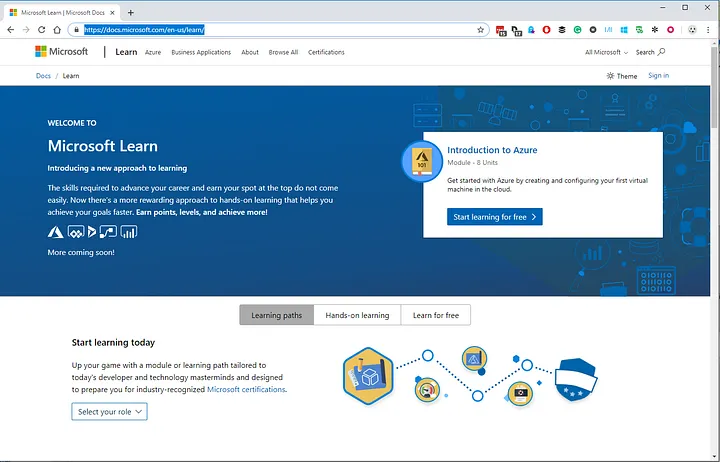
Office 365 Preview, circa 2013. The technology has changed dramatically since this screenshot. Curiosity, fortunately, has a much longer shelf life.
Premier Field Engineering
At the time, Microsoft’s Premier Field Engineering (PFE) organization worked directly with enterprise customers to improve operational health, architecture, performance, reliability, and readiness. The organization has evolved considerably since then, but many of the lessons I learned there still shape how I approach engineering today.
A Broader View of the Mission
Supporting USAFE changed how I think about technology.
Systems matter.
Architecture matters.
Reliability matters.
But they are rarely the end goal.
Technology exists to enable people to accomplish something more important.
Many of the most valuable conversations I had during those years weren’t about products.
They were about trust.
Readiness.
Partnership.
Communication.
Mission outcomes.
Those lessons have aged much better than any particular technology.

My access badge for the 83rd Network Operations Squadron, Detachment 4, at Ramstein Air Base. Carrying both a Microsoft badge and a USAFE badge wasn’t something I could have imagined when I accepted Microsoft’s offer in 2010.
Learning What Experience Is For
One of the quieter changes over these five years was realizing that I’d slowly become one of the people new employees called for advice.
When I joined Microsoft, I depended heavily on experienced colleagues.
By 2014, I found myself answering relocation questions, sharing customs paperwork, recommending neighborhoods, and explaining what we’d learned to other employees preparing for Germany.
Experience isn’t simply something we accumulate.
Its real value appears when we use it to make someone else’s path a little easier.
Things I Didn’t Know I Didn’t Know Five Years Earlier
When I accepted Microsoft’s offer in January 2010, I thought I had a pretty good idea of what the next few years might look like.
I expected to learn new technologies. I expected to work with talented people. I hoped I would earn the trust of customers and gradually become more confident in my role.
What I didn’t appreciate was how many of the most significant experiences were things I never would have thought to put on a list.
Five years ago, I didn’t know that…
- …I would still be at Microsoft five years later.
- …our family would move halfway around the world to Germany.
- …I would support the United States Air Forces in Europe.
- …my children would attend school in another country.
- …I would learn that an international relocation is one of the most complex projects a family can undertake.
- …I would discover that every meaningful career decision eventually becomes a family decision.
- …I would spend as much time learning about customs forms, SOFA paperwork, housing, schools, and shipping containers as I did learning about technology.
- …I would carry two very different badges every day: one that opened Microsoft buildings and another that opened doors at Ramstein Air Base.
- …some of my closest friendships would begin with people I had never met before joining Microsoft.
- …the technologies I worked with would change faster than the lessons I learned while using them.
- …I’d eventually become one of the people new employees turned to for advice.
- …the most valuable professional skill I’d develop wouldn’t be technical expertise. It would be learning how to keep learning.
Looking back, almost none of the experiences that shaped me most were part of a career plan.
They arrived disguised as opportunities, difficult decisions, inconvenient timing, unexpected conversations, and occasionally a willingness to say “yes” before I felt completely ready.
If my first five years taught me anything, it’s that the opportunities worth accepting are often the ones that don’t fit neatly into the plan you started with.
Looking Ahead
In my first-year post, I wrote about learning how to find answers.
Five years later, I still believe that was one of the most important lessons of my career.
What I didn’t understand then was that experience changes the questions.
Five years ago I was asking whether I belonged at Microsoft.
Today I’m more interested in whether I’m continuing to grow, whether I’m helping other people grow, and whether our family is becoming the kind of people we hoped we would be.
The badge represented an opportunity.
The crystal represents the journey that followed.
Looking back, I’m grateful for both.
Further Reading
If this chapter of the journey resonates with you, you may also enjoy:
- My First Year at Microsoft — Looking back on joining Microsoft and learning what it really meant to become part of the company.
- Why Germany? (future post) — Why our family chose an international assignment and everything that went into the decision.
- Living in Germany (future post) — Everyday life, travel, and raising a family overseas.
- Premier Field Engineering (future post) — Lessons from working alongside customers and some of Microsoft’s best engineers.