

I have a bit of a problem: I have carried a knife for most of my life, and I have also lost a lot of knives at events, stadiums, and airports.
There is no telling how many I have slipped into the base of a potted plant just before reaching a security line. Others have been handed over to guards outside Atlanta United matches. Once you realize there is no going back to the car, your options get pretty simple—and suddenly the price of the knife matters a lot.
Knives are practical. I have spent most of my life in the South, down in Georgia, where folks will almost fight over who gets to offer up a pocket knife when one is needed. A knife opens boxes, cuts rope, trims loose threads, and handles a hundred small jobs nobody thinks about until the moment arrives.
Down here, a pocket knife is more than a tool. It is part preparedness, part habit, and part quiet social contract: when something needs cutting, somebody in the group should be able to help. Long before everyday carry became “EDC” and acquired its own internet subculture, a knife in the pocket was simply part of getting dressed. A South Carolina columnist captured that older world perfectly in a story about pocket knives, schoolyards, Atlanta baseball, and Southern tradition. Even a 1973 issue of Outdoors in Georgia called the pocket knife “ever-present” and praised it for all the spur-of-the-moment cutting jobs that come with fishing and life outdoors.
But knives can also get expensive. Way too expensive to leave in a planter before the TSA checkpoint or surrender at a stadium gate.
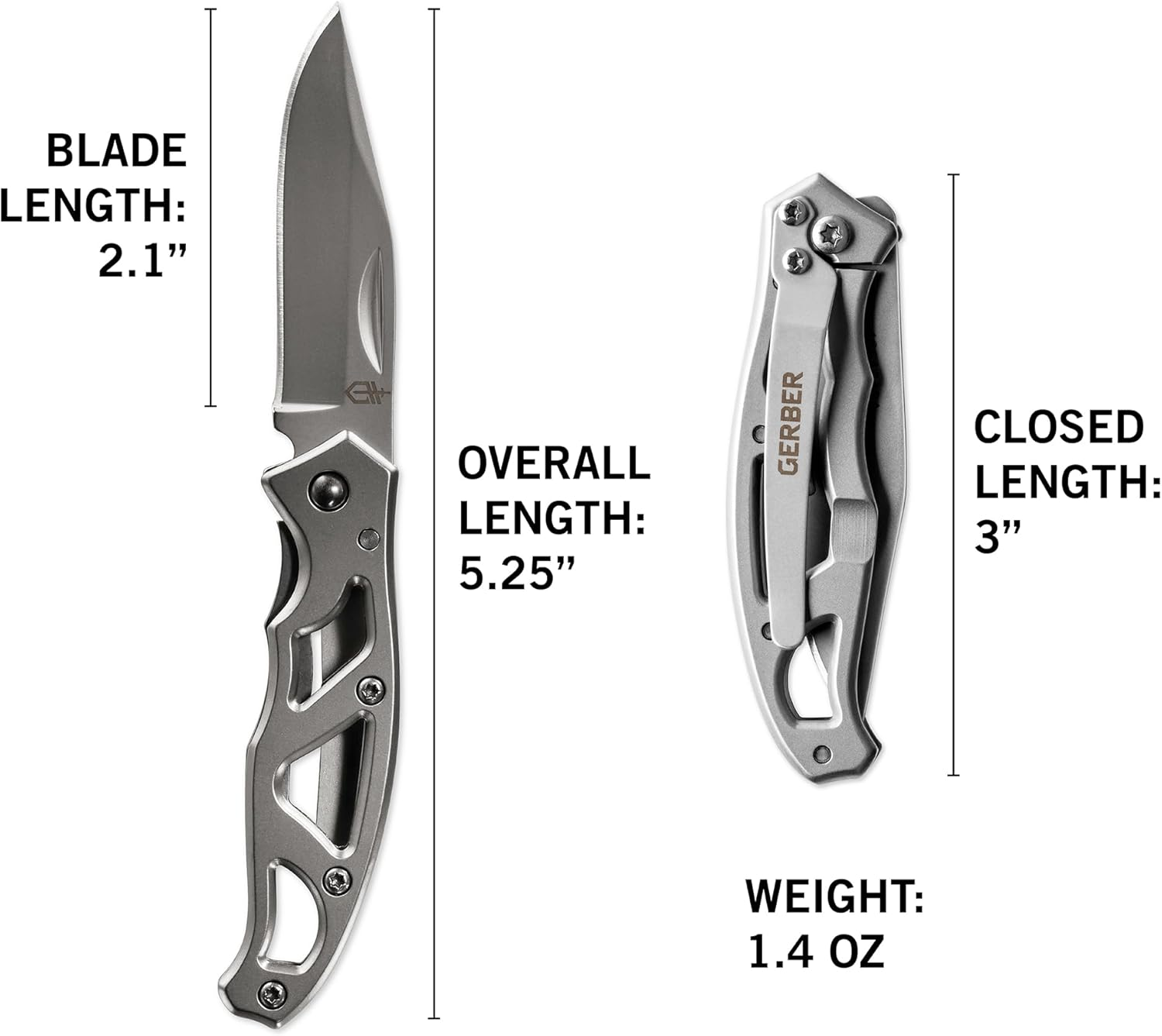
That is why the Gerber Paraframe Mini has been my go-to pocket knife for nearly two decades.
In modern language, it is my everyday carry knife: small enough to forget about until I need it, useful enough that I notice immediately when it is gone.
Here is the deal:
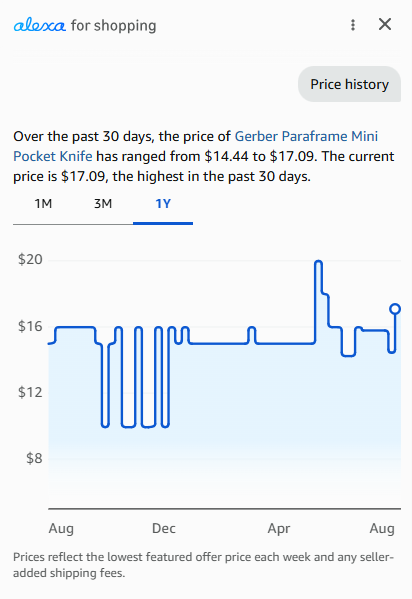
- It is cheap. My sweet spot has always been about $10–15 USD, though the recent Alexa price history suggests even the humble Paraframe is feeling a little inflation.
- It is relatively durable. Mine have handled years of ordinary, everyday abuse.
- It is easy to sharpen. No exotic blade or complicated edge—just a useful knife that is easy to bring back.
- It is thin and light. The open-frame handle keeps it from feeling like a brick in my pocket, and the clip makes it easy to carry.
There are better knives. There are sharper knives, tougher knives, prettier knives, and certainly more expensive knives. This is not the knife I would choose for a wilderness expedition or hand down as a family heirloom.
It is the knife I actually carry.
It is useful, easy to live with, and cheap enough that I will not stay up all night replaying the moment I forgot it was in my pocket and had to give it up at a security line. For me, that makes the Paraframe Mini a very good knife—and one of my favorite things.
As always, check local laws and the rules for airports, stadiums, and events before carrying any knife. I learned that lesson especially well after being detained and put on a list at London Stansted Airport for taking a fixed-blade knife through security—but that is a story for another day.
Rabbit hole
Pocket knives have been with us far longer than the term everyday carry. The British Museum catalog includes Roman folding knives from the first and second centuries. Centuries later, Sheffield became a center of the craft: pocket-knife production took hold there in the seventeenth century, and its cutlers made folding knives affordable enough to become ordinary working tools. The Hawley Tool Collection traces that evolution, while Heritage Crafts explains how pen knives, coachmen’s knives, and soldiers’ knives grew from the same tradition.
On this side of the Atlantic, the pocket knife became both tool and keepsake. The Smithsonian preserves an American folding pocket knife made around 1880, and Case traces its own American story to four brothers selling handmade knives along an upstate New York wagon trail beginning in 1889. That history helps explain how a small working tool became something people carried daily, collected, traded, gave as gifts, and handed down.
And then there is the legal rabbit hole. The UK government’s current guidance on buying and carrying knives says the public-carry exception applies only to folding pocket knives with a cutting edge no longer than three inches that do not lock. The Paraframe Mini has a frame lock, so its short blade alone does not put it inside that exception. “Pocket knife” can mean very different things on opposite sides of an airport security line.
PROTIP: When the UK security guards with automatic weapons ask you what you use the knife for, avoid saying, “Opening packages, cleaning my teeth, taking over island nations…” They will not find it as funny as you do.